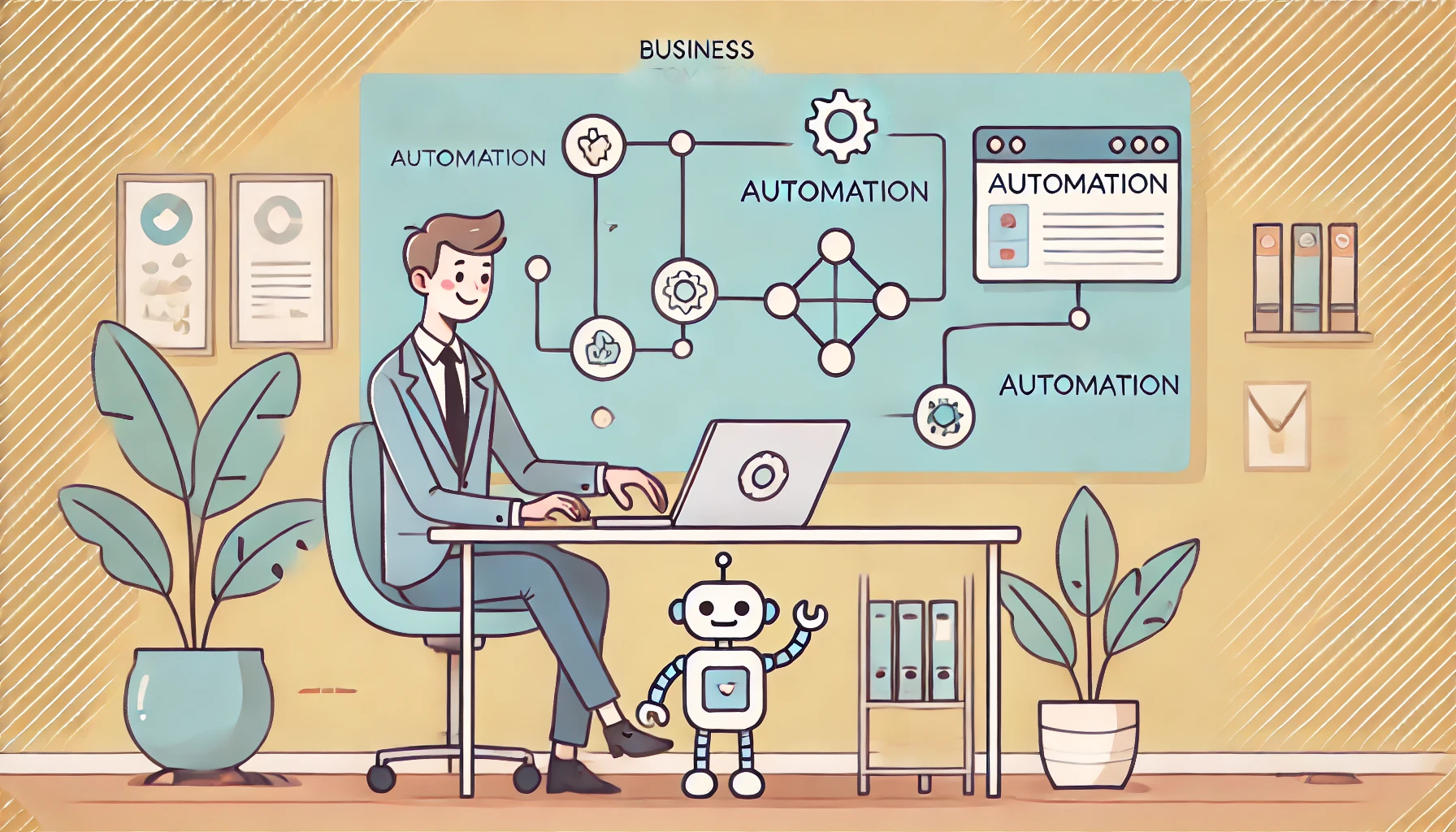
In today’s digital economy, business automation has become a key strategy for organizations that want to increase efficiency, reduce operational costs, and scale their operations. Companies across industries are investing in automation technologies to eliminate repetitive tasks and streamline complex workflows.
By implementing business automation, companies can focus their teams on strategic activities while software handles routine processes such as invoicing, data entry, reporting, and system integrations.
According to research and industry insights from IBM, enterprise automation is a critical component of digital transformation and operational efficiency in modern organizations.
As we move deeper into 2026, the adoption of business automation is no longer optional for companies that want to remain competitive.
Looking to implement business automation in your company?
At Apps Camelot, we build powerful software solutions designed to automate and optimize business processes. From advanced automation systems to custom invoicing platforms, our solutions help companies increase productivity and scale their operations efficiently.
Learn how we can help your business grow:
https://appscamelot.com
What is business automation?
Business automation refers to the use of technology, software systems, and digital tools to automatically execute business processes with minimal human intervention.
The main goal of business automation is to reduce manual work, minimize errors, and improve operational efficiency.
Modern automation technologies include:
- Business Process Automation (BPA)
- Robotic Process Automation (RPA)
- Workflow automation
- API integrations between systems
- AI-powered automation
According to Automation Anywhere, automation technologies help organizations eliminate repetitive tasks and improve the efficiency of complex business processes.
https://www.automationanywhere.com
Through business automation, companies can create streamlined workflows that operate consistently and reliably.
Key benefits of business automation
Implementing business automation can significantly improve business performance and operational efficiency.
Reduced operational costs
One of the biggest advantages of business automation is cost reduction. By automating repetitive tasks, companies reduce the amount of manual labor required for routine processes.
Automation also helps reduce errors that may lead to financial losses or operational inefficiencies.
Increased productivity
Another major benefit of business automation is the ability to complete tasks much faster than manual processes.
Automated systems can run 24/7 without interruption, enabling businesses to process large volumes of transactions or data efficiently.
Teams can then focus on strategic tasks such as innovation, customer relationships, and growth initiatives.
Scalability for growing companies
As businesses grow, manual processes quickly become inefficient. Business automation allows organizations to scale operations without dramatically increasing operational costs.
For example, automated systems can handle thousands of invoices, customer interactions, or transactions without requiring additional staff.
This scalability is one of the main reasons why business automation is becoming essential for modern companies.
Better data and decision making
Automation platforms collect valuable operational data that can be used to improve business decisions.
With business automation, companies gain access to real-time insights that help identify inefficiencies, optimize workflows, and improve strategic planning.
Examples of business automation in modern companies
Business automation can be implemented in many areas of an organization.
Automated invoicing systems
Invoicing automation allows companies to:
- Automatically generate invoices
- Send billing notifications
- Integrate payment systems
- Sync financial data with accounting platforms
This form of automation helps companies reduce accounting errors and accelerate financial processes.
Sales and CRM automation
Sales teams can benefit greatly from automation through tools that automatically manage customer interactions.
Examples include:
- automated lead tracking
- scheduled email campaigns
- CRM integrations
- customer behavior analysis
These systems help sales teams focus on closing deals instead of managing repetitive tasks.
Customer support automation
Customer service is another area where automation delivers major value.
Automation tools allow businesses to implement:
- chatbots
- automated ticket systems
- AI-powered customer support
- integrated communication platforms
This enables companies to provide faster support while reducing operational costs.
How to implement automation successfully
To successfully adopt business automation, companies should follow a strategic approach.
Identify repetitive processes
The first step is identifying tasks that consume time and require manual input.
Common candidates for automation include:
- invoicing
- reporting
- customer onboarding
- inventory management
- data synchronization between systems
Integrate existing systems
Many organizations use multiple software tools that do not communicate with each other.
Through automation, companies can integrate CRM systems, payment gateways, ERP platforms, and internal tools to create seamless workflows.
This integration significantly improves operational efficiency.
Develop custom automation solutions
Every company has unique workflows. In many cases, the most effective approach is developing custom software tailored to specific business needs.
Custom solutions ensure that automation aligns perfectly with a company’s processes and growth strategy.
The future of business automation
The future of automation is closely tied to emerging technologies such as:
- artificial intelligence
- machine learning
- predictive analytics
- intelligent workflow automation
Industry reports from Gartner indicate that organizations investing in automation technologies will gain significant competitive advantages in the coming years.
As technology continues to evolve, automation will become a central component of digital transformation strategies worldwide.
Conclusion
Business automation is transforming how companies operate by improving efficiency, reducing costs, and enabling scalable growth.
Organizations that adopt automation technologies can streamline operations, eliminate repetitive work, and empower their teams to focus on innovation and strategic initiatives.
If your company is looking to implement automation solutions, develop custom software, or build advanced invoicing systems, working with the right technology partner is essential.
At Apps Camelot, we specialize in building powerful software solutions that help businesses automate processes and grow efficiently.
Learn more:
https://appscamelot.com
Recommended Resources
Streamline operations in 2026 with proven automation platforms. Save time, cut costs.
- Top Business Automation Tools 2026
Power Automate process mining and UiPath RPA for enterprises. - 5 Top Automation Software Platforms 2026
Zapier connects 8,000+ apps with AI natural language workflows. - Definitive 2026 AI Automation Guide
HubSpot Breeze AI, Domo workflows and QuickBooks financial automation. - 8 Best Automation Software Tools Tested 2026
Lindy AI agents, UiPath enterprise scale and Workato orchestration. - 20 Best Workflow Automation Platforms 2026
Getint for IT teams, Make (Integromat) and Microsoft Power Automate. - 7 Best Automation Tools Rated 2026
Lindy task-specific agents and Blue Prism compliance automation.
Automate your CRM, leads and reporting today!

 Spanish
  English
Sin respuestas