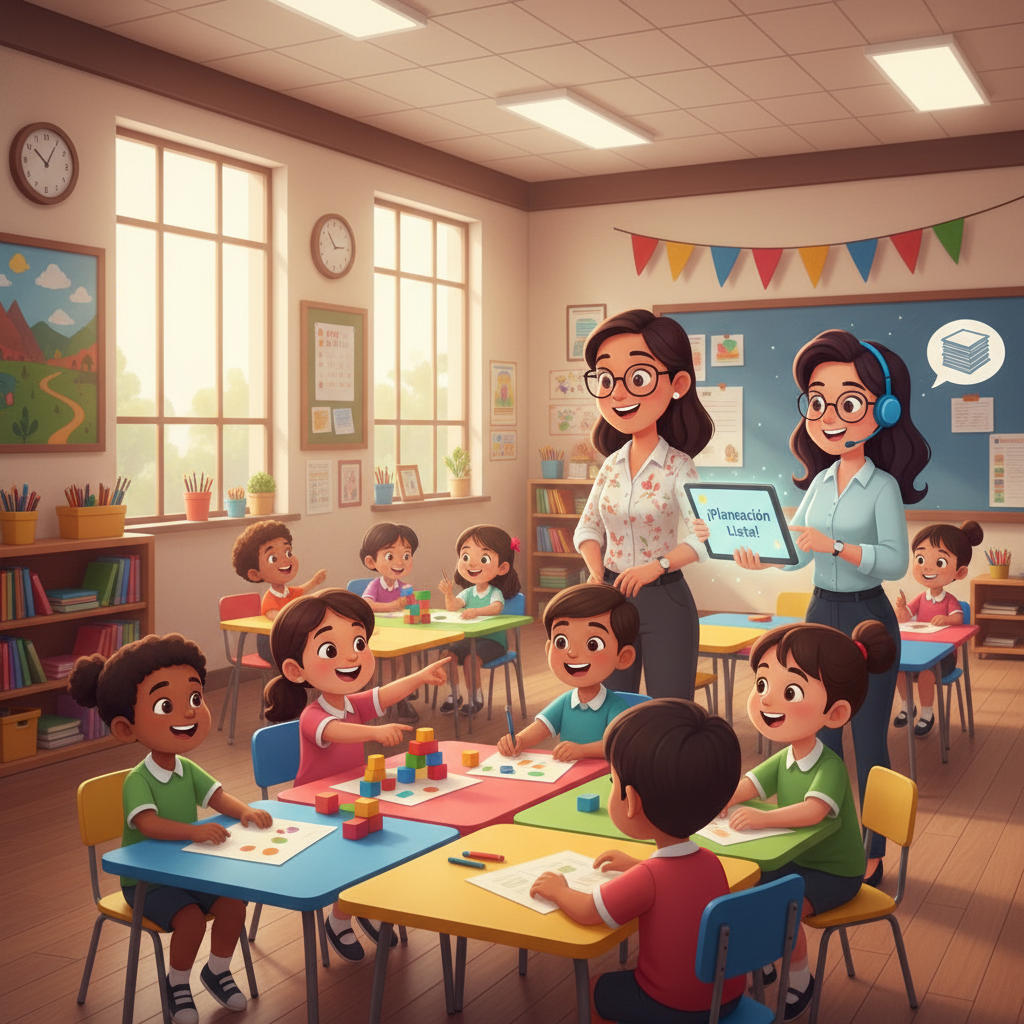
Planning for elementary school is one of the most important tasks for teachers. It helps organize learning activities, resources, assessment moments and classroom goals. However, teachers and school leaders also deal with attendance records, grades, student information, reports and group management.
When these tasks are handled manually, planning time becomes limited and administrative work grows quickly. That is why many schools are adopting digital tools to simplify school management and improve teacher organization.
With better Planning for elementary school and the right technology, teachers can spend less time capturing information and more time supporting student learning.
Discover Mari Asistente Docente, an educational ecosystem developed by Apps Camelot. It combines a web system and a bot to help schools reduce administrative workload, access information from a cellphone, manage students and groups, record attendance, review grades and consult available lesson plans. Request a demo at https://mari-primaria.appscamelot.com/onboarding-demo and learn more at https://mariasistentedocente.com.
What is Planning for elementary school?
Planning for elementary school is the process of organizing objectives, activities, materials and evaluation criteria for elementary-level classes.
Its purpose is to help teachers structure their work, follow educational guidelines and keep classroom activities aligned with student needs.
Good Planning for elementary school helps teachers:
- Organize learning activities.
- Prepare resources in advance.
- Track student progress.
- Identify support needs.
- Keep academic evidence organized.
- Save time during the school week.
It also becomes more efficient when teachers can access available lesson plans, a lesson plan catalog and organized educational content from one place.

Main challenges in elementary school organization
Many teachers need more than a document for Planning for elementary school. They also need a practical way to manage daily school information.
Common challenges include:
- Too much administrative work.
- Manual attendance records.
- Repeated data entry.
- Disorganized student and group information.
- Slow grade tracking.
- Limited access to clear reports.
- Difficulty finding available lesson plans.
- Need to work from a cellphone.
These problems affect time, organization and school communication.
How technology supports Planning for elementary school
Digital tools can make Planning for elementary school easier by centralizing information and reducing repetitive tasks.
Instead of using several files, notebooks or messages, schools can work from a single ecosystem that connects planning, attendance, grades, reports and student data.
Technology can help with:
- Faster attendance registration.
- Better student and group administration.
- Clearer grade tracking.
- Easier access to reports.
- Organized educational content.
- Access to available lesson plans.
- Work from a cellphone or web platform.
UNESCO highlights the importance of using digital learning tools to strengthen education systems. UNICEF also recognizes that digital solutions can support learning access and school organization. For official education information in Mexico, schools can also consult resources from the Secretaría de Educación Pública.
Mari Asistente Docente: more than a school platform
Mari Asistente Docente is an educational ecosystem developed by Apps Camelot to support teachers and schools with daily organization.
It is not only a school platform. It is not only a chatbot. Mari combines:
- A web system.
- A bot connected to WhatsApp.
- School administration tools.
- A lesson plan catalog.
- Available lesson plans.
- Organized educational content.
- School process automation.
Waibot participates in the chatbot and automation component, helping make communication and information access faster.
This means teachers and schools can work from a computer or cellphone, depending on what they need during the day.

How Mari helps with Planning for elementary school
Mari supports Planning for elementary school by connecting educational content with school management tools.
Student and group management
Schools can organize student information, groups and academic data in one place. This reduces scattered records and makes information easier to consult.
Quick attendance registration
Teachers can record attendance faster and keep a clearer history of student participation.
Grade tracking
Mari helps organize grades so teachers and administrators can review academic progress more easily.
Access to available lesson plans
Teachers can consult available lesson plans, explore the lesson plan catalog and access organized educational content that supports their classroom work.
WhatsApp access
The bot allows teachers to consult information from their cellphone, which is useful when they are away from a computer or need a quick answer.
Web platform access
The web system allows schools to centralize management, review information, organize activities and consult reports from a structured platform.
Why schools need better school management tools
Planning for elementary school works better when the administrative side is also organized.
Schools usually need tools that help them:
- Reduce manual tasks.
- Avoid duplicate information.
- Organize students and groups.
- Register attendance efficiently.
- Review grades clearly.
- Consult reports.
- Access available lesson plans.
- Work from cellphone and web.
- Centralize school information.
This is especially useful for directors, coordinators and teachers who need quick access to reliable information.
A practical example
A teacher may start the week by reviewing Planning for elementary school materials, checking the available lesson plans, organizing activities and confirming group information.
During the school day, the teacher can register attendance, review student data and consult information from WhatsApp. Later, the school team can use the web platform to review grades, reports and administrative information.
This type of workflow reduces manual work and helps schools stay organized.
Frequently asked questions
What is Planning for elementary school?
Planning for elementary school is the process of organizing objectives, activities, resources and evaluation criteria for elementary-level teaching.
Where can teachers find available lesson plans?
Teachers can use educational platforms that offer a lesson plan catalog, available lesson plans and organized educational content.
Does Mari Asistente Docente work from a cellphone?
Yes. Mari allows access through WhatsApp and also through a web platform.
What school processes does Mari support?
Mari supports attendance, students, groups, grades, reports, teacher organization, school administration and access to available lesson plans.
Who developed Mari Asistente Docente?
Mari Asistente Docente was developed by Apps Camelot, with Waibot participating in the chatbot and automation component.

Conclusion
Planning for elementary school is essential for organized teaching, but today’s schools also need tools that reduce administrative workload and centralize information.
Mari Asistente Docente, developed by Apps Camelot, connects a web system, WhatsApp bot, school administration tools and access to available lesson plans. It helps teachers and schools save time, organize information and work from a cellphone or computer.
External Links:
- Apps Camelot: Lesson Planning for Elementary School — A resource for organizing lesson objectives, classroom activities, attendance, grades, reports, and teaching materials with Mari Teacher Assistant.
- Waibot: Lesson Planning for Elementary School with Mari — A practical guide to using an educational chatbot to access planning resources and manage everyday school tasks through WhatsApp.
- KuraPlan: A Teacher’s Guide to Smarter Elementary Lesson Planning — A guide to creating lesson plans with clear learning goals, purposeful activities, and assessment checkpoints.
- Discovery Education: How to Write an Effective Lesson Plan — A lesson planning resource covering objectives, aligned activities, assessment strategies, and teacher reflection.
 Habla con Mari, la asistente docente virtual

 English
  Spanish
No Responses